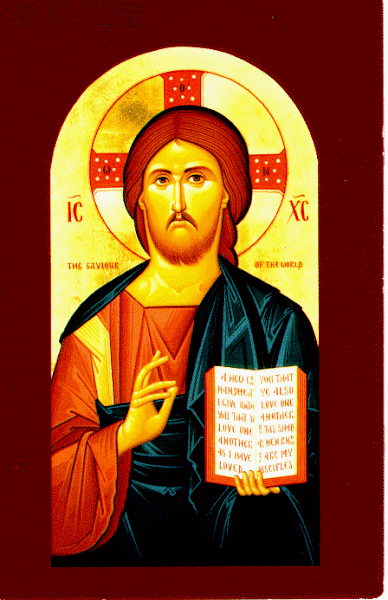


In the early Church there was a teaching known as "the two ways", the way of "Light", and the way of "Darkness". These were contrasted as what the Christian's life should consist of, and what it should not. The following excerpt regarding "the two ways" teaching is from the Epistle of St. Barnabas, chapters 18-20, circa 70-131 AD (probably first century though):
But let us now pass to another sort of knowledge and doctrine. There are two ways of doctrine and authority, the one of light, and the other of darkness. But there is a great difference between these two ways. For over one are stationed the light-bringing angels of God, but over the other the angels 2 Corinthians 12:7 of Satan. And He indeed (i.e., God) is Lord for ever and ever, but he (i.e., Satan) is prince of the time of iniquity.
The way of light, then, is as follows. If any one desires to travel to the appointed place, he must be zealous in his works. The knowledge, therefore, which is given to us for the purpose of walking in this way, is the following. You shall love Him that created you: you shall glorify Him that redeemed you from death. You shall be simple in heart, and rich in spirit. You shall not join yourself to those who walk in the way of death. You shall hate doing what is unpleasing to God: you shall hate all hypocrisy. You shall not forsake the commandments of the Lord. You shall not exalt yourself, but shall be of a lowly mind. You shall not take glory to yourself. You shall not take evil counsel against your neighbour. You shall not allow over-boldness to enter into your soul. You shall not commit fornication: you shall not commit adultery: you shall not be a corrupter of youth. You shall not let the word of God issue from your lips with any kind of impurity. You shall not accept persons when you reprove any one for transgression. You shall be meek: you shall be peaceable. You shall tremble at the words which you hear. You shall not be mindful of evil against your brother. You shall not be of doubtful mind James 1:8 as to whether a thing shall be or not. You shall not take the name of the Lord in vain. You shall love your neighbour more than your own soul. You shall not slay the child by procuring abortion; nor, again, shall you destroy it after it is born. You shall not withdraw your hand from your son, or from your daughter, but from their infancy you shall teach them the fear of the Lord. You shall not covet what is your neighbour's, nor shall you be avaricious. You shall not be joined in soul with the haughty, but you shall be reckoned with the righteous and lowly. Receive as good things the trials which come upon you. You shall not be of double mind or of double tongue, for a double tongue is a snare of death. You shall be subject to the Lord, and to [other] masters as the image of God, with modesty and fear. You shall not issue orders with bitterness to your maidservant or your man-servant, who trust in the same [God], lest you should not reverence that God who is above both; for He came to call men not according to their outward appearance, Ephesians 6:9 but according as the Spirit had prepared them. Romans 8:29-30 You shall communicate in all things with your neighbour; you shall not call things your own; for if you are partakers in common of things which are incorruptible, how much more [should you be] of those things which are corruptible! You shall not be hasty with your tongue, for the mouth is a snare of death. As far as possible, you shall be pure in your soul. Do not be ready to stretch forth your hands to take, while you contract them to give. You shall love, as the apple of your eye, every one that speaks to you the word of the Lord. You shall remember the day of judgment, night and day. You shall seek out every day the faces of the saints, either by word examining them, and going to exhort them, and meditating how to save a soul by the word, or by your hands you shall labour for the redemption of your sins. You shall not hesitate to give, nor murmur when you give. "Give to every one that asks you," and you shall know who is the good Recompenser of the reward. You shall preserve what you have received [in charge], neither adding to it nor taking from it. To the last you shall hate the wicked [one]. You shall judge righteously. You shall not make a schism, but you shall pacify those that contend by bringing them together. You shall confess your sins. You shall not go to prayer with an evil conscience. This is the way of light.
But the way of darkness is crooked, and full of cursing; for it is the way of eternal death with punishment, in which way are the things that destroy the soul, viz., idolatry, over-confidence, the arrogance of power, hypocrisy, double-heartedness, adultery, murder, rapine, haughtiness, transgression, deceit, malice, self-sufficiency, poisoning, magic, avarice, want of the fear of God. [In this way, too,] are those who persecute the good, those who hate truth, those who love falsehood, those who know not the reward of righteousness, those who cleave not to that which is good, those who attend not with just judgment to the widow and orphan, those who watch not to the fear of God, [but incline] to wickedness, from whom meekness and patience are far off; persons who love vanity, follow after a reward, pity not the needy, labour not in aid of him who is overcome with toil; who are prone to evil-speaking, who know not Him that made them, who are murderers of children, destroyers of the workmanship of God; who turn away him that is in want, who oppress the afflicted, who are advocates of the rich, who are unjust judges of the poor, and who are in every respect transgressors.
It is well, therefore, that he who has learned the judgments of the Lord, as many as have been written, should walk in them. For he who keeps these shall be glorified in the kingdom of God; but he who chooses other things shall be destroyed with his works. On this account there will be a resurrection, on this account a retribution. I beseech you who are superiors, if you will receive any counsel of my good-will, have among yourselves those to whom you may show kindness: do not forsake them. For the day is at hand on which all things shall perish with the evil [one]. The Lord is near, and His reward. Again, and yet again, I beseech you: be good lawgivers to one another; continue faithful counselors of one another; take away from among you all hypocrisy. And may God, who rules over all the world, give to you wisdom, intelligence, understanding, knowledge of His judgments, with patience. And be taught of God, inquiring diligently what the Lord asks from you; and do it that you maybe safe in the day of judgment. And if you have any remembrance of what is good, be mindful of me, meditating on these things, in order that both my desire and watchfulness may result in some good. I beseech you, entreating this as a favour. While yet you are in this fair vessel, do not fail in any one of those things, but unceasingly seek after them, and fulfill every commandment; for these things are worthy. Wherefore I have been the more earnest to write to you, as my ability served, that I might cheer you. Farewell, you children of love and peace. The Lord of glory and of all grace be with your spirit. Amen.
Thursday, October 22, 2009

Tuesday, October 20, 2009
Ancient Christian Faith
This is an excerpt from St. Irenaeus' Against Heresies, book 1 chapter 10. He was the second bishop of the Church in Lyons, France (then called Lugdunum, Gaul), circa 178-202 AD:
The Church, though dispersed through out the whole world, even to the ends of the earth, has received from the apostles and their disciples this faith: [She believes] in one God, the Father Almighty, Maker of heaven, and earth, and the sea, and all things that are in them; and in one Christ Jesus, the Son of God, who became incarnate for our salvation; and in the Holy Spirit, who proclaimed through the prophets the dispensations of God, and the advents, and the birth from a virgin, and the passion, and the resurrection from the dead, and the ascension into heaven in the flesh of the beloved Christ Jesus, our Lord, and His [future] manifestation from heaven in the glory of the Father "to gather all things in one," (Ephesians 1:10) and to raise up anew all flesh of the whole human race, in order that to Christ Jesus, our Lord, and God, and Saviour, and King, according to the will of the invisible Father, "every knee should bow, of things in heaven, and things in earth, and things under the earth, and that every tongue should confess" (Philippians 2:10-11) to Him, and that He should execute just judgment towards all; that He may send "spiritual wickednesses," (Ephesians 6:12) and the angels who transgressed and became apostates, together with the ungodly, and unrighteous, and wicked, and profane among men, into everlasting fire; but may, in the exercise of His grace, confer immortality on the righteous, and holy, and those who have kept His commandments, and have persevered in His love, some from the beginning [of their Christian course], and others from [the date of] their repentance, and may surround them with everlasting glory.
As I have already observed, the Church, having received this preaching and this faith, although scattered throughout the whole world, yet, as if occupying but one house, carefully preserves it. She also believes these points [of doctrine] just as if she had but one soul, and one and the same heart, and she proclaims them, and teaches them, and hands them down, with perfect harmony, as if she possessed only one mouth. For, although the languages of the world are dissimilar, yet the import of the tradition is one and the same. For the Churches which have been planted in Germany do not believe or hand down anything different, nor do those in Spain, nor those in Gaul, nor those in the East, nor those in Egypt, nor those in Libya, nor those which have been established in the central regions of the world. But as the sun, that creature of God, is one and the same throughout the whole world, so also the preaching of the truth shines everywhere, and enlightens all men that are willing to come to a knowledge of the truth. Nor will any one of the rulers in the Churches, however highly gifted he may be in point of eloquence, teach doctrines different from these (for no one is greater than the Master); nor, on the other hand, will he who is deficient in power of expression inflict injury on the tradition. For the faith being ever one and the same, neither does one who is able at great length to discourse regarding it, make any addition to it, nor does one, who can say but little diminish it.
It does not follow because men are endowed with greater and less degrees of intelligence, that they should therefore change the subject-matter [of the faith] itself, and should conceive of some other God besides Him who is the Framer, Maker, and Preserver of this universe, (as if He were not sufficient for them), or of another Christ, or another Only-begotten. But the fact referred to simply implies this, that one may [more accurately than another] bring out the meaning of those things which have been spoken in parables, and accommodate them to the general scheme of the faith; and explain [with special clearness] the operation and dispensation of God connected with human salvation; and show that God manifested longsuffering in regard to the apostasy of the angels who transgressed, as also with respect to the disobedience of men; and set forth why it is that one and the same God has made some things temporal and some eternal, some heavenly and others earthly; and understand for what reason God, though invisible, manifested Himself to the prophets not under one form, but differently to different individuals; and show why it was that more covenants than one were given to mankind; and teach what was the special character of each of these covenants; and search out for what reason "God has concluded every man in unbelief, that He may have mercy upon all;" (Romans 11:32) and gratefully describe on what account the Word of God became flesh and suffered; and relate why the advent of the Son of God took place in these last times, that is, in the end, rather than in the beginning [of the world]; and unfold what is contained in the Scriptures concerning the end [itself], and things to come; and not be silent as to how it is that God has made the Gentiles, whose salvation was despaired of, fellow-heirs, and of the same body, and partakers with the saints; and discourse how it is that "this mortal body shall put on immortality, and this corruptible shall put on incorruption;" (1 Corinthians 15:54) and proclaim in what sense [God] says, "That is a people who was not a people; and she is beloved who was not beloved;" (Hosea 2:23; Romans 9:25) and in what sense He says that "more are the children of her that was desolate, than of her who possessed a husband." (Isaiah 54:1; Galatians 4:27) For in reference to these points, and others of a like nature, the apostle exclaims: "Oh! The depth of the riches both of the wisdom and knowledge of God; how unsearchable are His judgments, and His ways past finding out!" (Romans 11:33) But [the superior skill spoken of] is not found in this, that any one should, beyond the Creator and Framer [of the world], conceive of the Enthymesis of an erring Æon, their mother and his, and should thus proceed to such a pitch of blasphemy; nor does it consist in this, that he should again falsely imagine, as being above this [fancied being], a Pleroma at one time supposed to contain thirty, and at another time an innumerable tribe of Æons, as these teachers who are destitute of truly divine wisdom maintain; while the Catholic Church possesses one and the same faith throughout the whole world, as we have already said.
Are Evangelicals disconnected from Western Civilization?
The author of this article seems to think so.
Monday, October 19, 2009
Ancient Christian Practice
Another excerpt from St. Justin's First Apology, chapter 67. This time he is describing the ancient Christian practice of meeting together on Sundays as the "common" day of assembly for the Christian community circa 150-55 AD:
And on the day called Sunday, all who live in cities or in the country gather together to one place, and the memoirs of the apostles or the writings of the prophets are read, as long as time permits; then, when the reader has ceased, the president verbally instructs, and exhorts to the imitation of these good things. Then we all rise together and pray, and, as we before said, when our prayer is ended, bread and wine and water are brought, and the president in like manner offers prayers and thanksgivings, according to his ability, and the people assent, saying Amen; and there is a distribution to each, and a participation of that over which thanks have been given, and to those who are absent a portion is sent by the deacons. And they who are well to do, and willing, give what each thinks fit; and what is collected is deposited with the president, who succours the orphans and widows and those who, through sickness or any other cause, are in want, and those who are in bonds and the strangers sojourning among us, and in a word takes care of all who are in need. But Sunday is the day on which we all hold our common assembly, because it is the first day on which God, having wrought a change in the darkness and matter, made the world; and Jesus Christ our Saviour on the same day rose from the dead. For He was crucified on the day before that of Saturn (Saturday); and on the day after that of Saturn, which is the day of the Sun, having appeared to His apostles and disciples, He taught them these things, which we have submitted to you also for your consideration.
And on the day called Sunday, all who live in cities or in the country gather together to one place, and the memoirs of the apostles or the writings of the prophets are read, as long as time permits; then, when the reader has ceased, the president verbally instructs, and exhorts to the imitation of these good things. Then we all rise together and pray, and, as we before said, when our prayer is ended, bread and wine and water are brought, and the president in like manner offers prayers and thanksgivings, according to his ability, and the people assent, saying Amen; and there is a distribution to each, and a participation of that over which thanks have been given, and to those who are absent a portion is sent by the deacons. And they who are well to do, and willing, give what each thinks fit; and what is collected is deposited with the president, who succours the orphans and widows and those who, through sickness or any other cause, are in want, and those who are in bonds and the strangers sojourning among us, and in a word takes care of all who are in need. But Sunday is the day on which we all hold our common assembly, because it is the first day on which God, having wrought a change in the darkness and matter, made the world; and Jesus Christ our Saviour on the same day rose from the dead. For He was crucified on the day before that of Saturn (Saturday); and on the day after that of Saturn, which is the day of the Sun, having appeared to His apostles and disciples, He taught them these things, which we have submitted to you also for your consideration.
Ancient Christian Worship
Another excerpt from St. Justin's First Apology, chapters 65 & 66, describing the sacramental nature of the Christian's worship circa 150-55 AD:
But we, after we have thus washed him who has been convinced and has assented to our teaching, bring him to the place where those who are called brethren are assembled, in order that we may offer hearty prayers in common for ourselves and for the baptized [illuminated] person, and for all others in every place, that we may be counted worthy, now that we have learned the truth, by our works also to be found good citizens and keepers of the commandments, so that we may be saved with an everlasting salvation. Having ended the prayers, we salute one another with a kiss. There is then brought to the president of the brethren bread and a cup of wine mixed with water; and he taking them, gives praise and glory to the Father of the universe, through the name of the Son and of the Holy Ghost, and offers thanks at considerable length for our being counted worthy to receive these things at His hands. And when he has concluded the prayers and thanksgivings, all the people present express their assent by saying Amen. This word Amen answers in the Hebrew language to γένοιτο [so be it]. And when the president has given thanks, and all the people have expressed their assent, those who are called by us deacons give to each of those present to partake of the bread and wine mixed with water over which the thanksgiving was pronounced, and to those who are absent they carry away a portion.
And this food is called among us Εὐχαριστία [the Eucharist, meaning "thanksgiving"], of which no one is allowed to partake but the man who believes that the things which we teach are true, and who has been washed with the washing that is for the remission of sins, and unto regeneration, and who is so living as Christ has enjoined. For not as common bread and common drink do we receive these; but in like manner as Jesus Christ our Saviour, having been made flesh by the Word of God, had both flesh and blood for our salvation, so likewise have we been taught that the food which is blessed by the prayer of His word, and from which our blood and flesh by transmutation are nourished, is the flesh and blood of that Jesus who was made flesh. For the apostles, in the memoirs composed by them, which are called Gospels, have thus delivered unto us what was enjoined upon them; that Jesus took bread, and when He had given thanks, said, "This do in remembrance of Me, Luke 22:19 this is My body;" and that, after the same manner, having taken the cup and given thanks, He said, "This is My blood;" and gave it to them alone...And we afterwards continually remind each other of these things. And the wealthy among us help the needy; and we always keep together; and for all things wherewith we are supplied, we bless the Maker of all through His Son Jesus Christ, and through the Holy Ghost.
Sunday, October 18, 2009
Ancient Christian Baptism
An excerpt from St. Justin the Martyr's First Apology, chapter 61, on baptism in the ancient Church circa 150-55 AD:
I will also relate the manner in which we dedicated ourselves to God when we had been made new through Christ; lest, if we omit this, we seem to be unfair in the explanation we are making. As many as are persuaded and believe that what we teach and say is true, and undertake to be able to live accordingly, are instructed to pray and to entreat God with fasting, for the remission of their sins that are past, we praying and fasting with them. Then they are brought by us where there is water, and are regenerated in the same manner in which we were ourselves regenerated. For, in the name of God, the Father and Lord of the universe, and of our Saviour Jesus Christ, and of the Holy Spirit, they then receive the washing with water. For Christ also said, "Unless you be born again, you shall not enter into the kingdom of heaven." John 3:5 Now, that it is impossible for those who have once been born to enter into their mothers' wombs, is manifest to all. And how those who have sinned and repent shall escape their sins, is declared by Esaias the prophet, as I wrote above; he thus speaks: "Wash you, make you clean; put away the evil of your doings from your souls; learn to do well; judge the fatherless, and plead for the widow: and come and let us reason together, says the Lord. And though your sins be as scarlet, I will make them white like wool; and though they be as crimson, I will make them white as snow. But if you refuse and rebel, the sword shall devour you: for the mouth of the Lord has spoken it. " Isaiah 1:16-20
And for this [rite] we have learned from the apostles this reason. Since at our birth we were born without our own knowledge or choice, by our parents coming together, and were brought up in bad habits and wicked training; in order that we may not remain the children of necessity and of ignorance, but may become the children of choice and knowledge, and may obtain in the water the remission of sins formerly committed, there is pronounced over him who chooses to be born again, and has repented of his sins, the name of God the Father and Lord of the universe; he who leads to the laver the person that is to be washed calling him by this name alone. For no one can utter the name of the ineffable God; and if any one dare to say that there is a name, he raves with a hopeless madness. And this washing is called illumination, because they who learn these things are illuminated in their understandings. And in the name of Jesus Christ, who was crucified under Pontius Pilate, and in the name of the Holy Ghost, who through the prophets foretold all things about Jesus, he who is illuminated is washed.
Covenants in Scripture Part 3
This is a continuation of our ongoing discussion of covenants in the Bible. If you have not already read the first two posts, and their subsequent comments, I suggest that you do so now as this will give the adequate context to know where we currently are at in our discussion.
Basically, a passage of relevant Scripture will be quoted and discussion will ensue as to what is meant in the particular passage. Once "universal" agreement has been reached regarding its meaning, we will then move on to another "Part" of the series with another passage of relevant Scripture.
Everyone is welcome to participate in this exchange. I will ask that anyone participating to please follow these short guidelines, as they will help insure that we all stay on track and remain focused:
1. All discussion will be regarding the Biblical covenants, and what they mean.
2. All discussion will center on the passage under discussion. Please no "jumping" to other passages of Scripture.
3. Once agreement has been reached regarding the passage under discussion, the thread will then be "closed", and we will all move on to the next "Part" in the series.
4. All quoting from commentaries/books must be short enough to fit within a single comment.
5. Everyone will keep their comments to one single comment only. No "multi-part" comments allowed from anyone. The reason for this is that short comments help to maintain focus better.
Any and all comments not adhering to these "rules" will be deleted by the moderator (me).
Covenants in Scripture Part 3
Genesis 15
1After these things the word of the LORD came unto Abram in a vision, saying, Fear not, Abram: I am thy shield, and thy exceeding great reward.
2And Abram said, LORD God, what wilt thou give me, seeing I go childless, and the steward of my house is this Eliezer of Damascus?
3And Abram said, Behold, to me thou hast given no seed: and, lo, one born in my house is mine heir.
4And, behold, the word of the LORD came unto him, saying, This shall not be thine heir; but he that shall come forth out of thine own bowels shall be thine heir.
5And he brought him forth abroad, and said, Look now toward heaven, and tell the stars, if thou be able to number them: and he said unto him, So shall thy seed be.
6And he believed in the LORD; and he counted it to him for righteousness.
7And he said unto him, I am the LORD that brought thee out of Ur of the Chaldees, to give thee this land to inherit it.
8And he said, LORD God, whereby shall I know that I shall inherit it?
9And he said unto him, Take me an heifer of three years old, and a she goat of three years old, and a ram of three years old, and a turtledove, and a young pigeon.
10And he took unto him all these, and divided them in the midst, and laid each piece one against another: but the birds divided he not.
11And when the fowls came down upon the carcases, Abram drove them away.
12And when the sun was going down, a deep sleep fell upon Abram; and, lo, an horror of great darkness fell upon him.
13And he said unto Abram, Know of a surety that thy seed shall be a stranger in a land that is not theirs, and shall serve them; and they shall afflict them four hundred years;
14And also that nation, whom they shall serve, will I judge: and afterward shall they come out with great substance.
15And thou shalt go to thy fathers in peace; thou shalt be buried in a good old age.
16But in the fourth generation they shall come hither again: for the iniquity of the Amorites is not yet full.
17And it came to pass, that, when the sun went down, and it was dark, behold a smoking furnace, and a burning lamp that passed between those pieces.
18In the same day the LORD made a covenant with Abram, saying, Unto thy seed have I given this land, from the river of Egypt unto the great river, the river Euphrates:
19The Kenites, and the Kenizzites, and the Kadmonites,
20And the Hittites, and the Perizzites, and the Rephaims,
21And the Amorites, and the Canaanites, and the Girgashites, and the Jebusites.
Subscribe to:
Posts (Atom)